
Investigation reveals two London councils bought homes leading to tenant evictions
By Ben Lynch and Katherine Gray - Local Democracy Reporting Service 26th Jun 2026

Multiple London councils are buying up homes for temporary housing without any knowledge of whether people are being evicted as a result of the sales.
An investigation by the Local Democracy Reporting Service (LDRS) has found tenants across London may have been turfed out by landlords selling their homes to councils for use as temporary accommodation, adding to the housing crisis.
Data obtained by the LDRS revealed how 11 of the capital's authorities are in the dark as to whether evictions took place ahead of the sales, with many simply claiming the removal of former tenants was the responsibility of the previous landlord.
Other authorities, including Enfield, were aware of renters leaving properties prior to purchase, with two of their households recorded in 2024 as having been evicted via Section 21 notices, known as no fault evictions which are now illegal.
In March, the LDRS revealed that tenants were being kicked out of a block in Kew so that Westminster City Council could use their homes for temporary accommodation, sparking fury from Richmond Council. However our investigation reveals the issue is widespread among the city's councils.
London Renters Union has said that councils should be focusing on increasing the amount of social housing. It said that while more homes should be brought back into public ownership, this should not result in evictions and that temporary housing is not the answer.

Jae Vail, a spokesperson for the union, said: "Temporary accommodation is a short-term fix to a long-term problem.
Download our Nub News App!
- It’s FREE and available now- Breaking news notifications
- Your Town in Your Pocket


"We've seen social and council housing sold off for Right To Buy, it was demolished especially in parts of London and we should be focusing on building back that stock rather than pouring money into temporary accommodation."
He said that the union is also concerned about more such evictions taking place, as landlords still legally have the right to kick out tenants if they are selling up.
'They've broken up a family'
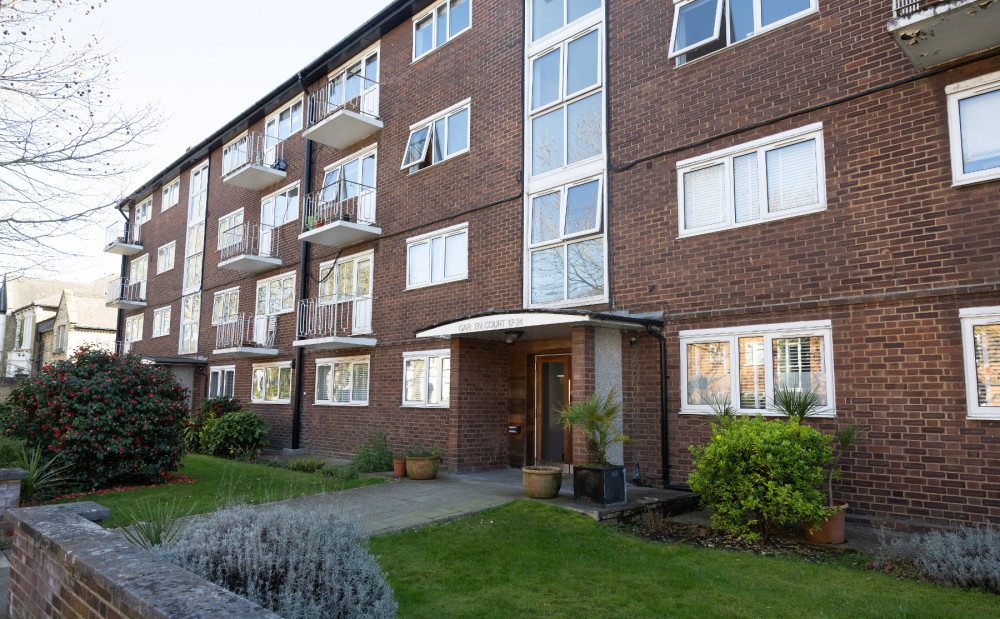
Residents living in Garden Court opposite Kew Gardens were served Section 21 eviction notices by their landlord, Dorrington, to enable a sale to Westminster City Council to proceed.
While Section 21 notices have since been outlawed as part of the Government's renters' rights package, landlords are still able to evict tenants when they are selling a property. However the process involved has changed and more notice must be given.
The LDRS reported that Westminster, which was at the time Labour-run, was in the midst of buying the Richmond block to use it for temporary accommodation despite more than 30 households already living there.
The council said the sale was on the basis that the homes would be vacant, with Dorrington responsible for evicting any tenants.
Michael Slade, a resident of Garden Court for 16 years, told the LDRS: "It's a family. They've broken up a family, my friends come in here, drink tea and coffee with me, and we chat. They phone me up every day. Everyone's within walking distance."
Following the press coverage, Westminster City Council told Mr Slade and several other residents that they could stay in their homes.

'The building owner is responsible'
Following the Richmond story, the LDRS submitted Freedom of Information (FoI) requests to all 32 London councils plus the City of London Corporation, asking about properties bought for temporary accommodation in 2025 and 2026 until May 1, when the new renters' rights bill came into effect.
All but eight had responded at the time of writing, with the data outlining where councils had purchased homes and what records they held of people living there before the sale.
Not all councils have bought properties for temporary accommodation within the given timeframe.
Kingston Council confirmed that, while no evictions took place, there were some instances where tenants left of their own accord after the landlord issued a notice of their intention to sell.
Eleven other councils said they did not record whether the properties were previously occupied despite them having to be vacant to enable new tenants to move in.
One such authority is Brent, in North West London. According to its response, the local authority purchased a total of 30 homes in 2025 and 20 in 2026, all of which were in the borough.
In its response to the FoI request the council said: "We do not hold information on occupation prior to purchase.
"The council has not evicted tenants from any of the properties acquired; all purchases were completed with vacant possession and the building owner is responsible for providing vacant possession. We do not hold information on occupation prior to purchase or evictions by previous building owners."

Asked why such details are not recorded, a spokesperson told the LDRS Brent sources properties on the open market and is not routinely provided with background information about occupiers or reason for sale.
They added the council acquires properties with vacant possession, and that responsibility for removing tenants lies with the seller.
'The council does not evict tenants'
The LDRS also asked whether it seems somewhat circular to be buying properties for temporary accommodation which may involve previous tenants being made homeless.
In response, the spokesperson said: "Brent does not receive information on previous tenancies of any accommodation it purchases.
"The purpose of the acquisition programme is to increase the supply of safe and suitable temporary accommodation for homeless households and to reduce reliance on more expensive and less secure forms of temporary accommodation.
"The council does not evict tenants from properties it acquires and does not instruct owners to serve Section 21 notices. Brent also continues to work to prevent homelessness wherever possible and provides advice and assistance to residents who approach the council following the loss, or threatened loss, of their home."
They added they are not aware of any case when a household approached the council as homeless because they had been evicted from a property bought by the local authority.
Brent's case is not unique. Hackney Council, for example, revealed it had purchased 43 units for temporary accommodation between March 2024 and March 2026.
In its FoI response, however, it stated: "The council did not record whether the properties were occupied or vacant at the time of purchase.
"The council purchased these units with vacant possession. Any action to remove any former occupants was directly dealt with by the property vendor, and the council had no involvement with this vacant possession process.
Hackney Council was approached for further comment.
Southwark said it does not have a register for properties bought for temporary accommodation, meaning it cannot provide any data on prior occupation.
Westminster, which since the May elections has been run by the local Conservative group, was one of the councils that did know tenants had been evicted to enable the purchase.
The council's FoI response lists properties bought from Richmond to Newham, as well as in Westminster itself. The vast majority of those acquired are listed as "previously occupied", with the vendor having obtained vacant possession ahead of the sale.
Most of these are down as having several bedrooms, suggesting families may have been relocated as a result.
Westminster City Council was approached for comment.
'More genuinely affordable homes'
Richmond Council has condemned Westminster over the evictions at Kew Gardens. It says that while some progress has been made, it is still concerned about their approach.
Cllr Gareth Roberts, Leader of Richmond Council, said: "Richmond Council, by contrast, does not have a policy of acquiring homes by displacing existing tenants.
"We recognise the immense pressures councils face in tackling homelessness and providing temporary accommodation – Richmond faces those same challenges. But efforts to house one family should not come at the expense of another family's housing security."
He said Richmond Council is focused on increasing its housing supply, adding that it has already bought back 50 former Right to Buy homes, and recently announced investment to acquire a further 50.
"The housing emergency facing London is real, but solving it cannot mean making existing residents pay the price. We need more genuinely affordable homes and more long-term solutions – not approaches that leave people fearing for their future," added Cllr Roberts.
Commenting on our findings, a spokesperson for London Councils said while the capital has a longstanding shortage of affordable housing, "the situation had undoubtedly worsened in recent years".
This has been reflected in the fact that from 2015 to 2025 the number of London households in temporary accommodation has increased by more than 50 per cent (48,000 to 73,000).
The spokesperson added London Councils has called for more support at a national policy level, including helping the capital meet its spiralling temporary accommodation bill and boosting the Local Housing Allowance rates.
The group has also urged the Government to provide more capital funding for councils to build or buy homes.
"Building on positive initiatives like the Local Authority Housing Fund, the Government should further increase boroughs' capital funding to build or acquire properties," the spokesperson said.
"This would improve both the quality and value of temporary accommodation, particularly by reducing local authorities' reliance on a sometimes volatile private rented sector, while also helping to meet long-term housing needs."
A Ministry of Housing, Communities and Local Government spokesperson said: "We expect councils to make sure tenants aren't unfairly caught out when they're purchasing homes for housing stock – but our renters reforms mean no one can be kicked out for no reason.
"More broadly we're investing £39 billion to deliver the biggest boost to social and affordable housing in a generation so we have the social homes we need, and we're supporting councils to improve the quality of temporary accommodation."
Download our Nub News App:
- It’s FREE and available now
- Breaking news notifications
- Your Town in Your Pocket

Share: