
Boston Terrier Insurance and Health Guide: Eyes, Knees, Breathing and Vet Costs
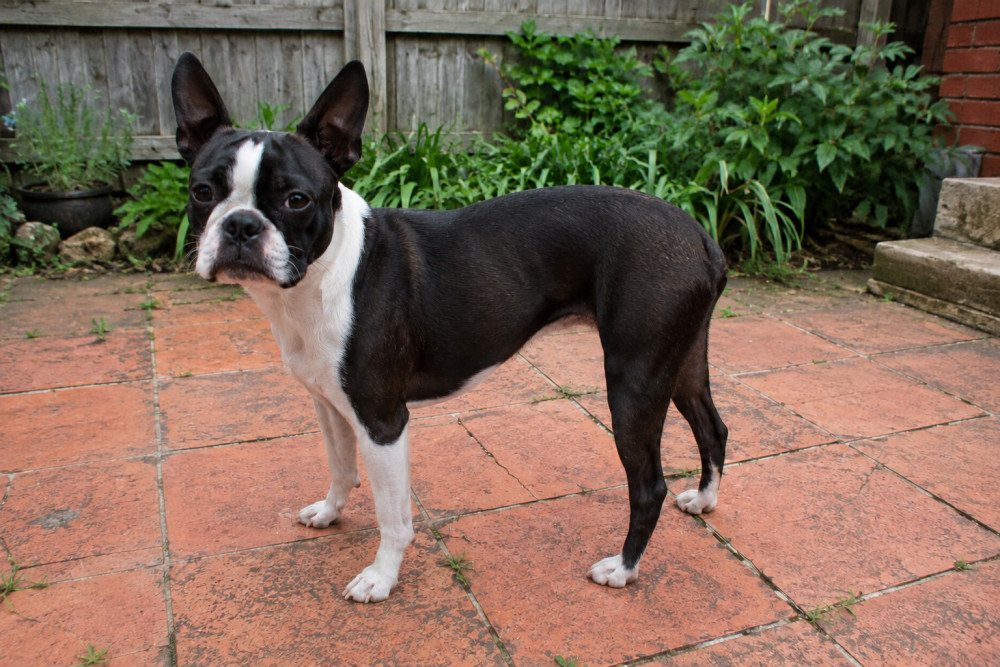
Corneal ulcers, luxating patella and breathing difficulty are separately reported in Boston Terrier breed material. These associations do not predict any of the three problems in one dog, and the evidence reviewed does not connect the eye and knee conditions. A vet must assess each presentation, decide how urgent it is and recommend care.
Owners comparing Boston Terrier insurance should consider each health concern separately, then check how the policy handles first signs, initial waiting periods, annual limits and excesses. A diagnosis made later does not erase an earlier clinical note. Eye, knee and breathing histories support their own assessments, and the breed label alone does not join them.
Eye problems can need prompt veterinary assessment
A corneal ulcer is an open lesion on the surface of the eye. It is reported as a common Boston Terrier eye problem, and prominent, exposed eyes are associated with the risk, although no incidence figure is available. Some cases resolve with veterinary treatment, while other presentations need urgent attention. The examining vet, rather than an owner assessing the eye at home, decides urgency and care.
For insurance, the circumstances and wording determine whether an eye presentation is assessed as accidental injury or illness. There is no market-wide rule that places every corneal ulcer in either category. Payment depends on treatment being medically necessary, eligible and within the terms. Cosmetic or elective care falls outside this valid-claim description. An eye problem present before the policy began is outside the general boundary for a new condition.
Knee concerns follow their own clinical record
Luxating patella means that the kneecap moves out of its usual groove. It is commonly reported in Boston Terrier breed-health material. Surgery is one possible response, but there is no general rule about when it is required. That decision belongs to the vet, and no reliable operation-price figure is available here.
Insurance applies a separate test. The knee condition must first arise after cover begins, treatment must satisfy the remaining policy terms and eligible costs can be paid only from the unused veterinary-fee allowance for that year. Knee evidence supports a knee assessment rather than proving a link with an eye or breathing condition.
Breathing difficulty needs an individual assessment
Breathing difficulty is reported in connection with the breed's flat-faced conformation, but the association does not diagnose an individual dog. A breathing problem already present when cover starts is outside the general eligibility described for a new condition. No treatment route, price or claim example is established here, and no connection to the eye or knee evidence is stated.
The absence of a defined route is important. Breed information may prompt an owner to seek veterinary advice, but it cannot determine diagnosis, medical necessity or claim eligibility.
Clinical notes can set the insurance timeline
The first relevant sign may appear in the record before diagnosis or treatment. A later diagnosis does not move that date. An existing eye or breathing problem therefore remains outside the new-condition boundary. A kneecap problem generally needs to arise after cover starts before it can be insurable.
A later problem is not automatically connected to an earlier one. The insurer must use the clinical evidence and policy wording rather than an assumption based on breed. The same evidence also informs whether an eye presentation falls under accident or illness terms.
Check the opening wait before cover becomes active
Accident cover is immediate with Petplan, Agria and Direct Line. Napo applies a 24-hour wait, ManyPets a 48-hour wait, Animal Friends a two-day wait and Sainsbury's Money a three-day wait. Across those providers, accident cover therefore begins immediately or within three days.
Waggel has a 14-day opening period for both accidental injury and illness. Its accident wait is longer than that of every other named provider. Neither type of treatment is active during those 14 days, and relevant signs arising in the period receive its pre-existing-condition treatment. Because a corneal ulcer may be assessed as accident or illness according to the circumstances, an owner cannot assign a future claim to one wait in advance.
Completing a waiting period never guarantees payment. Medical necessity, first-sign evidence, exclusions and the full terms still apply.
Plan the annual limit and excess around separate problems
Annual capacity applies across all eligible claims in the policy year. Waggel customers select an annual veterinary-fee limit from £1,000 to £15,000, and each eligible claim reduces the chosen allowance. Eye and knee treatment assessed as distinct conditions would still draw from the same yearly total.
The provider's selectable fixed excess runs from £0 to £500. It is charged by condition and can apply again in any new policy year in which that condition is claimed. If eye and knee problems are treated as distinct conditions, each can attract a separate fixed excess in the same year.
Related-condition and bilateral treatment rules are not defined in the evidence reviewed. It cannot be assumed that opposite eyes or knees share one condition, excess, allowance or pre-existing status. An annual limit or a policy-year excess also does not, by itself, prove that an ongoing condition will remain covered for life. Future-year cover for continuing eye, knee or breathing treatment is not confirmed.
Understand how an eligible claim is settled
Eligible care under Waggel's terms can be provided by any practice as long as an RCVS-registered veterinary surgeon delivers it. Direct settlement is possible only when the practice agrees, so it is not guaranteed. Otherwise, the customer pays the practice and requests reimbursement through the app. Claims are administered in the app rather than by telephone and must be submitted within 12 months of treatment. None of these routes guarantees eligibility or payment.
Keep the three health strands separate when planning
Eye, knee and breathing problems need their own veterinary evidence. Corneal-ulcer classification depends on the circumstances, knee care depends on the individual diagnosis and breathing history remains a separate pre-existing assessment. The policy's first-sign rules, opening wait, unused annual capacity and excess can then affect the financial outcome.
Whether a later presentation is related to an earlier one remains unresolved, as does the treatment of opposite eyes or knees. Owners should not assign one excess, allowance or pre-existing status across them without further policy evidence. Clinical decisions remain with the veterinary team, while the insurer makes the claim assessment under the current wording.
New kingston Jobs Section Launched!!
Vacancies updated hourly!!
Click here: kingston jobs
Share: