Roll Labels vs Sheet Labels: Which Format Is More Cost-Effective for Your Business?
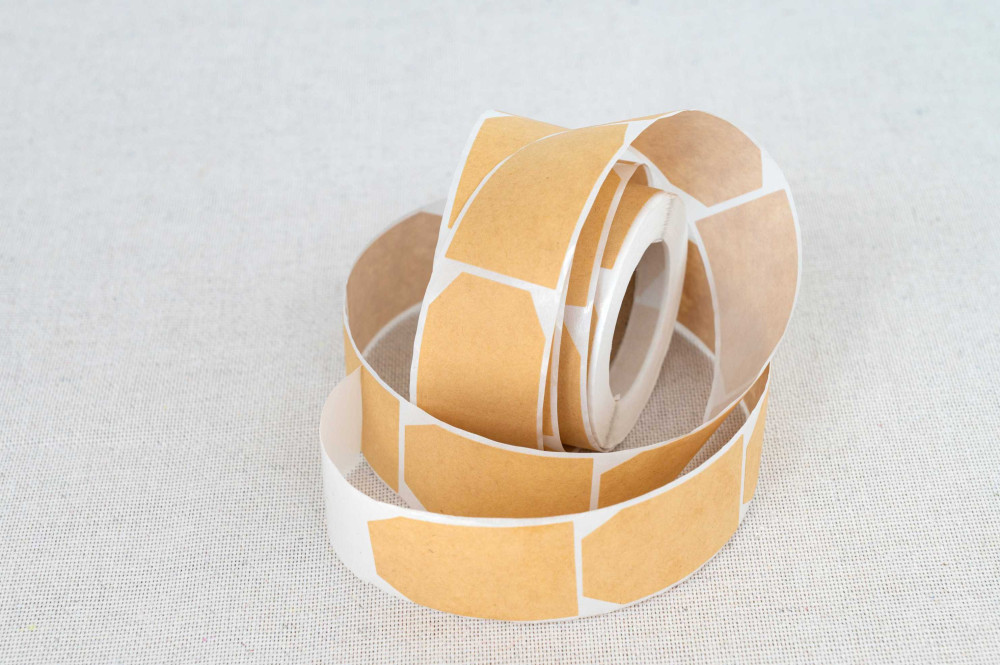
The debate between roll labels and sheet labels is a classic dilemma for operations managers, small business owners, and procurement teams alike. At first glance, a label is simply a piece of paper or plastic with an adhesive backing. However, the format in which those labels are supplied, wound around a central core or laid flat on an A4 sheet, drastically alters your printing costs, labour efficiency, and upfront capital expenditure.
So, which format is truly more cost-effective for your business? The answer is not always a straightforward case of choosing the cheapest per-unit option. To help you make an informed decision, this guide breaks down the financial, operational, and practical differences between roll labels and sheet labels from CDM Labels.
Understanding the Formats: Roll Labels vs Sheet Labels
Before diving into the financial calculations, it is essential to define exactly what each format entails and how they are typically used in British businesses.
What are Roll Labels?
Roll labels consist of a continuous strip of liner material wound around a cardboard core (typically 25mm, 38mm, or 76mm in diameter), upon which individual die-cut labels are arranged. They are specifically engineered to be used with dedicated thermal printers (both direct thermal and thermal transfer) or industrial automated labelling machinery.
What are Sheet Labels?
Sheet labels are supplied as flat, individual sheets, most commonly in standard A4 size in the UK, with a matrix of die-cut labels arranged across the page. These are designed to be fed directly into standard desktop office equipment, such as standard inkjet or laser printers.
1. Upfront Costs vs Long-Term Savings
When assessing cost-effectiveness, you must balance your immediate setup expenses against your long-term, ongoing operational costs.
The Sheet Label Advantage: Low Barriers to Entry
For startups and micro-businesses, sheet labels are almost always the most cost-effective entry point. Why? Because they require virtually zero upfront hardware investment.
If your office already has a standard desktop laser printer, you can buy a pack of A4 label sheets and begin printing immediate address labels, transit stickers, or product tags. There is no need to purchase specialised printing machinery, meaning your initial capital expenditure (CapEx) remains safely at zero.
The Roll Label Advantage: Economy of Scale
While sheet labels win on upfront hardware costs, roll labels completely dominate when it comes to material costs at volume.
The manufacturing process for roll labels is highly efficient, utilising large-scale rotary presses that produce thousands of labels per minute. This high-speed production translates to a significantly lower cost-per-label. When you buy labels in rolls of 500, 1,000, or 2,000, the unit price plummets to a fraction of a penny per label. For businesses scaling up their dispatches, the initial investment in a dedicated desktop thermal printer (such as a Zebra printer) is quickly offset by the massive savings accumulated over thousands of printed units.
2. Printing Technology and Ongoing Consumable Costs
The running costs of your chosen printing method play a massive role in long-term affordability. The distinction between ink-based printing and thermal printing is that roll labels often pull ahead financially.
Desktop Printers (Inkjet & Laser)
Sheet labels are bound to the economics of traditional office printing.
- Inkjet printers rely on expensive liquid ink cartridges that run out quickly, especially if you are printing heavy barcodes or solid logos.
- Laser printers utilise toner cartridges, which, while more economical than ink, still represent a recurring and substantial cost.
Furthermore, feeding heavy adhesive label sheets through a standard office printer causes faster wear and tear on the printer drums and rollers, potentially leading to premature maintenance or replacement costs.
Thermal Printers (Direct Thermal & Thermal Transfer)
Roll labels are primarily designed for thermal printing technologies, which offer remarkable financial benefits:
- Direct Thermal Printing: This method uses heat-sensitive paper labels. The printer head applies heat directly to the label surface to create the text or image. Crucially, direct thermal printing requires absolutely no ink, toner, or ribbons. Your only recurring consumable cost is the labels themselves. This makes direct thermal roll labels the absolute gold standard for cost-effective shipping labels, courier labels (such as Royal Mail or Evri formats), and short-term tracking tags.
- Thermal Transfer Printing: This method uses a heated ribbon to melt ink onto the label material. While it introduces a ribbon as an extra consumable cost, it allows for highly durable, scratch-resistant, and weatherproof labels (like polypropylene or polyester) that won't fade under sunlight or chemical exposure. Even with the cost of the ribbon included, thermal transfer printing on rolls remains highly competitive compared to desktop inkjet printing.
3. Labour Efficiency and Application Speed
In business, time is money. True cost-effectiveness must factor in the labour hours required to print, peel, and apply your labels to products or packaging.
The Hidden Costs of Sheet Labels in Operations
Imagine a warehouse worker fulfilling 200 orders an afternoon using A4 sheet labels:
- They must wait for the desktop laser printer to warm up and process the multi-page PDF.
- Once printed, they have to carefully handle the flat sheet, locate the correct label, and peel it off away from the matrix.
- As labels are used haphazardly across a sheet, workers are often left with half-empty A4 sheets. Feeding a partially used label sheet back through a laser printer can cause the remaining labels to peel off inside the machine, leading to catastrophic jams, ruined stock, and wasted maintenance hours.
Streamlining with Roll Labels
Roll labels are designed from the ground up for high-efficiency environments.
- Rapid Output: Desktop thermal printers print roll labels at incredible speeds, often up to 6 inches per second, dispensing them one after the other in a neat, continuous stream.
- Effortless Application: Peeling a label off a curved roll is ergonomically much faster than picking it off a flat A4 sheet. Many thermal printers can even be fitted with automatic peelers or dispensers that present the label with the backing paper already removed, shaving seconds off every single package handled.
- Automation Ready: If your business grows to the point of automated assembly or conveyor-belt packaging, roll labels are the only format compatible with automatic label applicators. Choosing roll labels early ensures your packaging architecture is future-proofed for automated scaling.
4. Material Waste and Inventory Management
Waste reduction is a vital pillar of modern cost-optimisation and environmental sustainability.
Feature
Sheet Labels (A4)
Roll Labels
Ideal Volume
Low volumes / Ad-hoc tasks
Medium to high volumes / Continuous printing
Consumable Waste
High (often left with half-used sheets or discarded margins)
Zero (print exactly 1 or 1,000 labels with no matrix waste)
Material Flexibility
Mostly standard paper or basic clear/coloured plastics
Wide array (Economy paper, Top-coated, Non-tear Polypropylene, Waterproof)
Storage Footprint
Flat boxes are prone to corner damage and moisture curling
Compact cylindrical rolls, easily stacked on shelving
With sheet labels, if you only need to print three shipping labels, you must use a sheet that contains, for example, 4 or 8 labels. The remaining blank spaces on that sheet are frequently wasted or misaligned during future print runs.
Conversely, roll labels give you the precision to print exactly what you need. Whether you require a single warning sticker or a continuous run of 5,000 barcode labels, a roll printer dispenses the exact quantity without generating a single millimetre of unnecessary layout waste.
5. Summary Matrix: Which Format Fits Your Business Budget?
To help you decide where to direct your packaging budget, review the scenarios below to see where your business aligns.
Choose Sheet Labels if:
- You are a startup, hobbyist, or small boutique business handling fewer than 20–30 labels per week.
- You already own a reliable desktop laser or inkjet printer and want to avoid upfront equipment costs.
- Your labelling tasks are ad-hoc, varied, and do not require rapid, continuous output.
- You primarily work from a small desk or home office, where flat A4 storage is more convenient than mounting printing hardware.
Choose Roll Labels if:
- You run an e-commerce store, warehouse, or manufacturing unit processing dozens or hundreds of parcels daily.
- You want to slash long-term consumable costs by switching to ink-free direct thermal printing for shipping and tracking.
- Speed and worker efficiency are vital metrics in your fulfilment process.
- You need specialised material properties, such as heavy-duty weatherproof, freezer-proof, or non-tear gloss polypropylene finishes, to protect your branding during transit.
- You want to eliminate material waste by printing the exact number of labels required for each batch.
Conclusion: Making the Cost-Effective Choice
When evaluating roll labels versus sheet labels, cost-effectiveness is ultimately determined by your operational volume and growth trajectory.
For micro-businesses operating at low volumes, sheet labels offer an undeniably affordable, low-risk entry point by utilising existing office hardware. However, as soon as your dispatch volume becomes a daily, continuous operation, the hidden costs of sheet labels, expensive ink cartridges, slow manual application speeds, and material waste, will quickly erode those initial savings.
Transitioning to roll labels paired with a dedicated thermal printer introduces a modest upfront hardware cost, but it unlocks massive long-term dividends. By dramatically lowering the cost-per-unit, eliminating ink and toner expenses entirely, and drastically speeding up your packaging line, roll labels stand out as the ultimate cost-effective champions for scaling businesses.
Take a close look at your weekly output, calculate the time your team spends peeling stickers, and make the switch to the label format that keeps your business moving efficiently and profitably.
New kingston Jobs Section Launched!!
Vacancies updated hourly!!
Click here: kingston jobs
Share: