
Kingston dad publishes advice book for parents of SEND children
By Tilly O'Brien 24th May 2026
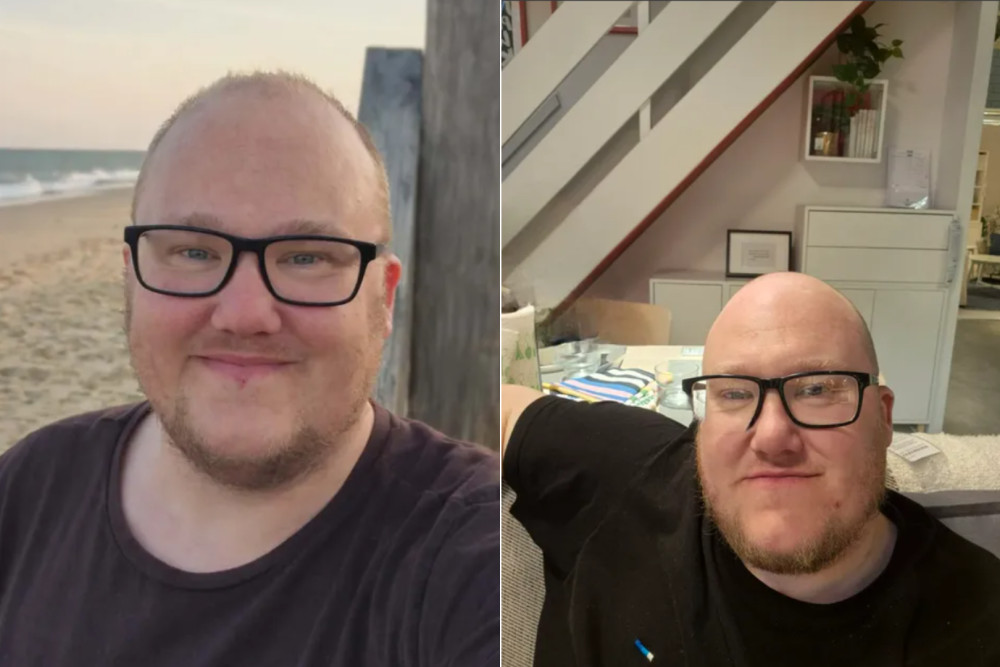
A dad from Kingston has published an advice book for parents of children with Special Educational Needs and Disabilities (SEND).
Jack O'Shea, a Kingston-based SEND advocate, parent, and long-term Personal Assistant supporting young people with additional needs, has released his debut book Let the Child Lead — Understanding Parents, Professionals, and the Child at the Centre of SEND Support.
Blending lived experience with nearly two decades of frontline work, the book explores the emotional and practical disconnect that often develops among families, professionals, and systems designed to support children with SEND.
Rather than positioning blame, Let the Child Lead focuses on translation, understanding, and communication — asking what happens when adults become so focused on processes, paperwork, and outcomes that the child's actual voice becomes filtered through interpretation.
The book uses real-world reflections, storytelling, metaphors, and observations from both sides of the table — as a professional supporting families, and as a parent navigating the system himself.
Topics explored include emotional burnout within SEND systems, EHCP experiences and communication breakdowns, the difference between behaviour and understanding, parents and professionals working together instead of against each other, and why children themselves should remain at the centre of every decision.
O'Shea has been sharing excerpts, reflections, and discussions surrounding the book on TikTok through his account, where his videos discussing SEND experiences, advocacy, and parenting have connected with families, professionals, and carers across the UK.
O'Shea said: "The book isn't about attacking professionals or telling parents they're always right. It's about recognising that everyone involved is often exhausted, emotional, and trying to help, but somewhere along the line the child's actual voice can become lost in translation."
Download our Nub News App!
- It’s FREE and available now- Breaking news notifications
- Your Town in Your Pocket


In an exclusive interview with Nub News, O'Shea explained that his 12-year-old daughter was born with Tricuspid atresia and pulmonary atresia, severe congenital heart defects present from birth that alter normal blood flow through the heart.
He said: "I'm no longer with the mother of my child, but we found out about my daughter's medical condition at 16 weeks pregnant, and the first thing that the doctors said to us was we should get an abortion, but we refused.
"My daughter was born prematurely and in the first three years of her life had three major cardiac operations, and her mother and I basically lived in the hospital.
"We managed to secure accommodation in the nurses' block of the building of the hospital she was born at and lived on and off there for three years."
O'Shea says that doctors have diagnosed his daughter with Autism Spectrum Disorder (ASD) because "it was the easiest label to give her other than developmental delay and brain damage related to the cardiac condition".
He said: "ASD was an easier label to get, and it was easier to get her support by giving her an ASD diagnosis than it was exploring anything else. It would have just taken too long, and she wouldn't have got the support that she needed."
O'Shea's daughter is currently in a specialist school that he says is "supporting her academically, socially and emotionally".
His daughter may never reach five feet tall, and she will not be allowed to get pregnant because if she does, O'Shea says, "that would be catastrophic for her".

She is also not allowed to get piercings or tattoos, and she cannot partake in physical sports, such as trampolining, horse riding or any sport that could cause contact.
If she has a nosebleed for longer than two minutes, she needs to be taken to the hospital immediately.
O'Shea says that any physical injury could "potentially kill" his daughter, as could a "common cold".
Thus, he says, the COVID19 pandemic was very difficult, as given that he and his daughter's mother are separated, he had to talk to his daughter through a window while sitting in his ex partner's garden.
He said: "There was no way that I would have risked going into her mum's or having her come to my house for a cuddle and just be like, 'I love you kid' because it would potentially have killed her."
In winter months, O'Shea's daughter's body often turns blue.
"Her body is working so hard to keep her warm that her fingers will go blue as well as her toes and nose," he said.
O'Shea continued: "The oldest person living with my daughter's medical condition that the NHS knows of is in their mid-30s, so we know that it's a very life-limiting condition but looking at my daughter now, she is the strongest human being I think I've ever known, and she has taught me so much about myself.
"So we try not to let the disability define her. She has her limitations, and the stress and guilt of constantly focusing on our daughter is why her mum and I are no longer together."
Guilt is a topic O'Shea touches on in his book.
He said: "There is so much guilt that a parent doesn't say out loud that they carry when they have a child with additional needs.
"You find out you're pregnant and everyone is like 'congratulations is it a boy or a girl' and you say something along the lines of 'I couldn't care less so long as they're healthy', which is 100% true, and then you're hit with news that your child will be different than everybody else's and you think 'did I jinx it, was it me did I put this out into the world because I said it out loud' and then you feel grief but you feel grief for a child you never had."
O'Shea explained that this grief expands to the idea that SEND parents may never hit the traditional milestones with their child, such as taking them to the pub for their first pint at 18 or meeting their first romantic partner.
He said: "You think, 'actually, I'm not going to have that for my kid. I'm not going to have this universal experience that every parent has', but actually, every parent doesn't have that universal experience, we just don't think we do.
"You need to find a way to, as a parent, forgive yourself for feeling those feelings and just enjoy the kids you've got and enjoy the experiences you've got."
O'Shea says that he is in a "very unique position", as before having his daughter, he was a SEND professional.
He said: "I saw this in other parents but just didn't realise how much that parent felt until I became one myself, and a lot of professionals have absolutely no idea about what goes on in the background for the parents."
This, O'shea says, is his reason for writing the book.
He said: "Parents need to know that they can forgive themselves and that they are entitled to feel their feelings and that they are valid.
"I still haven't got over half the stuff that I feel. I feel like there is the baggage for me, but if I can acknowledge that I've got that baggage, that's part of the way to healing whereas professionals look at the pieces of paper and want to do the next right thing and think they know what the next right thing is because it's written under point one."
Sharing his personal experience of both being a SEND parent and a former SEND professional to guide SEND parents is something O'Shea does expertly well in his book.
The author continued: "We've built a system where we feel like everything is a logic game."
He says that, instead, SEND professionals should be listening to the children themselves and asking them what they need.
O'Shea added: "There is so much more to it than the system we have currently, and equally, no system is going to be perfect.
"The parents need to understand that, there's a lot of give and take, but no parent looks at it from a professional's point of view, and no professional looks at it from a parent's point of view - that's the conversation that we need to have.
"We're never going to fix it overnight. The system is always going to be the way it is. It doesn't matter what we improve because something else will go wrong somewhere else within that system, that's life, but no one's acknowledging it, no one's saying it out loud, and we need to have that conversation."
Speaking about his aims for the book, O'Shea told Nub News: " If it helps one person, I've done my job, that's number one. And secondly, it's about being able to approach the conversation and all the stuff that no one says out loud, but we all know is true, and the reason we don't say it out loud is that it hurts, and it should all be about the child at the end of the day, but we can't help them until we have this conversation.
"I don't claim to know all the answers, but what I do want to do is prompt the conversation so that people can find those answers for themselves, and I don't care if people get the hump over the book.
"I don't care if people get upset or angry, because it prompts the conversation. I will quite happily take the criticism on the nose if it means that the support of the children is improved."
Having read the book, O'Shea certainly does an excellent job of not claiming that he is all knowledgeable of how to help SEND children; instead, he uses his personal experiences to suggest that parents and professionals should listen to the children.
O'Shea says that SEND parents find it difficult because "everyone just sees my kid as naughty, but in fact my kid's needs just aren't being met, and they need to be".
He added: "So, it's about prompting the conversation.
"This, for me, isn't about the money, so I am committing that every sale of the book means that I will put a book into a community library.
So, at the moment, I've got 33 boroughs of London, and I have either community libraries or "little libraries" partaking in this project.
"So, what I'm doing is for every sale of the book, I will travel to every London borough and drop a copy off, and the more sales there are, the more I will be able to drop those books off and get the conversation going."
Let the Child Lead is written in a simple manner with short sentences no longer than three lines to enable busy parents to easily pick up on where they left off should they need to pause reading.
This, I believe, is the perfect way to get through the book swiftly yet properly without merely skimming it.
Let the Child Lead is available now on Amazon in paperback and Kindle format and can be purchased here.
Download our Nub News App:
- It’s FREE and available now
- Breaking news notifications
- Your Town in Your Pocket
Share: